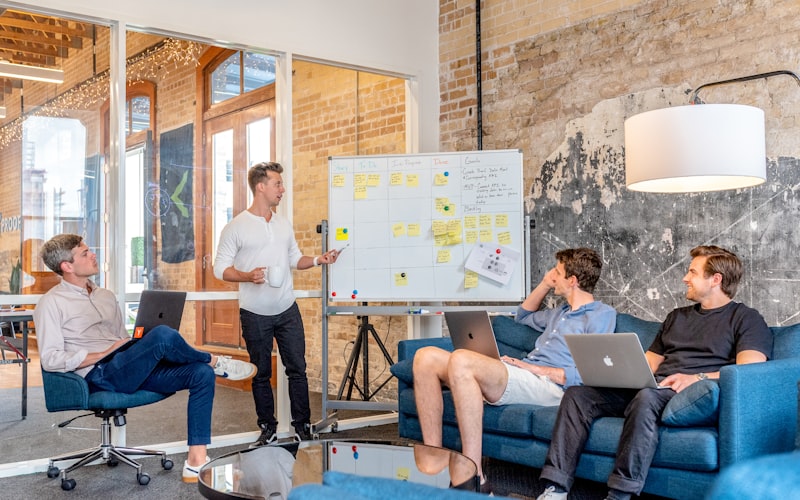
USER RESEARCH

Build for the customer you actually have, not the one you assumed

Internal teams are the worst judges of their own product, because they already know how to use it. Decisions made on assumption rather than evidence tend to solve problems customers do not actually have.

We run the research that replaces assumption with evidence, talking to real users, watching how they actually use a product, and surfacing the friction they experience but rarely report directly. The research is designed to answer specific questions your team needs to make design decisions, not to produce general findings that leave the decisions unchanged.

The most expensive research is the kind that gets commissioned after a product has launched to disappointing numbers. We run it before the build, when findings can change what gets built rather than documenting what went wrong after.

What's happening in User Research

0 %
of customers say they will not return after one frustrating experience, friction that users do not report directly still ends the relationship, and it is only visible through research
0 %
say they do not trust a poorly designed or dated looking product, trust signals are invisible to the team that built the product and visible only when you watch someone new use it for the first time
0 %
of customers will leave a brand they loved after a single bad experience, one overlooked failure mode discovered in testing is less damaging than the same failure mode discovered by customers post-launch
0 %
of users abandon a product entirely because of a poor experience, abandonment driven by usability failures rarely shows up in support tickets, which is why it persists until someone looks for it directly

What we offer

USER INTERVIEWS

Talk to real users to understand what they actually need

We run structured interviews with users who match your actual audience, not internal stakeholders or team members who already understand the product. Interviews are designed around specific questions your team needs to answer, and findings are synthesised into insights your team can act on, not raw transcripts they have to interpret themselves.

SURVEYS & QUANTITATIVE RESEARCH

Measure at scale what interviews surface qualitatively

Interviews identify problems. Surveys measure how widespread those problems are. We design surveys around the questions that matter, not around what is easy to ask, and we analyse results against your user segments so findings are attributable to specific audiences rather than averaged into conclusions that apply to nobody specifically.

RESEARCH SYNTHESIS & REPORTING

Turn raw findings into decisions your team can act on

Research that produces a report nobody reads has produced nothing. We synthesise findings into specific, prioritised recommendations tied to the design decisions they inform. Reports are structured around what to do, not just what was observed, so your team finishes the research with a clear list of actions, not a set of findings they have to turn into actions themselves.

USABILITY TESTING

Watch real users attempt tasks to find where they struggle

We run moderated usability tests where participants attempt realistic tasks with your product while we observe. The goal is to watch where users hesitate, what they misunderstand, and where they abandon, not to ask them what they think about the design. Testing happens with wireframes or prototypes, when findings can be acted on without rebuilding.

COMPETITOR & HEURISTIC ANALYSIS

Evaluate your product against what users have been trained to expect

Users arrive at your product with expectations shaped by every other product they use. A heuristic review evaluates your product against established usability principles and identifies deviations that create unnecessary friction. A competitor analysis maps where your product differs from alternatives users are already familiar with and where those differences work against you.

THE WEBIZONA DIFFERENCE

Why choose Webizona as your User Research company?

Research before the build

The most expensive user research is the kind commissioned after a product launches to disappointing numbers. We run research at the design stage, when findings can change what gets built rather than document what went wrong after it shipped.

Real users, not internal proxies

Participants are recruited to match your actual user profile, not internal team members who already know the product, or stakeholders who have a stake in confirming what was already decided. Research with the wrong participants produces confidence in the wrong conclusions.

Findings you can act on

Reports are structured around what to do, not just what was observed. Each finding is prioritised, tied to the decision it informs, and accompanied by a specific recommendation. Research that produces a list of observations without recommendations is not finished.

Benefits

Common Questions

Five participants with the right profile surface the majority of usability issues. Research value comes from participant quality and task design, not from running the same flawed task with more people. We design tasks around the decisions the research needs to answer and recruit participants who genuinely match your user profile.
Before design begins, and again at the prototype stage before development starts. Research done before design informs what gets built. Research done at the prototype stage catches structural and usability problems before they are expensive to fix. Research done after launch is the most expensive kind, it documents what went wrong rather than preventing it.
We use specialist recruitment panels, your existing customer database where appropriate, and for consumer products, targeted panel recruitment. We write screeners designed to exclude the participants who skew findings, people who are too familiar with your industry, too motivated to be helpful, or who do not match your actual user profile in ways that matter for the research questions.
Moderated testing is conducted with a researcher present, the researcher can probe, redirect, and observe non-verbal behaviour. Unmoderated testing uses a tool where participants complete tasks independently. Moderated testing produces richer qualitative insight. Unmoderated testing scales to more participants at lower cost. We recommend moderated for early-stage research where you need to understand why; unmoderated is effective for validating specific hypotheses at scale.
We prioritise by the combination of frequency (how many users experience the issue), severity (how significantly it affects task completion), and fixability (how much work is required to address it). Issues that affect most users, block task completion, and require moderate effort to fix are addressed first. Issues that are rare, cosmetic, or require disproportionate effort relative to their impact are documented and deprioritised.

Whats happening in User Research