
CONTENT STRATEGY

Content that earns attention rather than buying it

Most content programmes produce content that fills a calendar rather than content that generates pipeline. The topics are chosen by what is easy to write about, the distribution is whatever channels the team already uses, and the measurement is volume and engagement rather than whether the content moved anyone closer to a purchase.

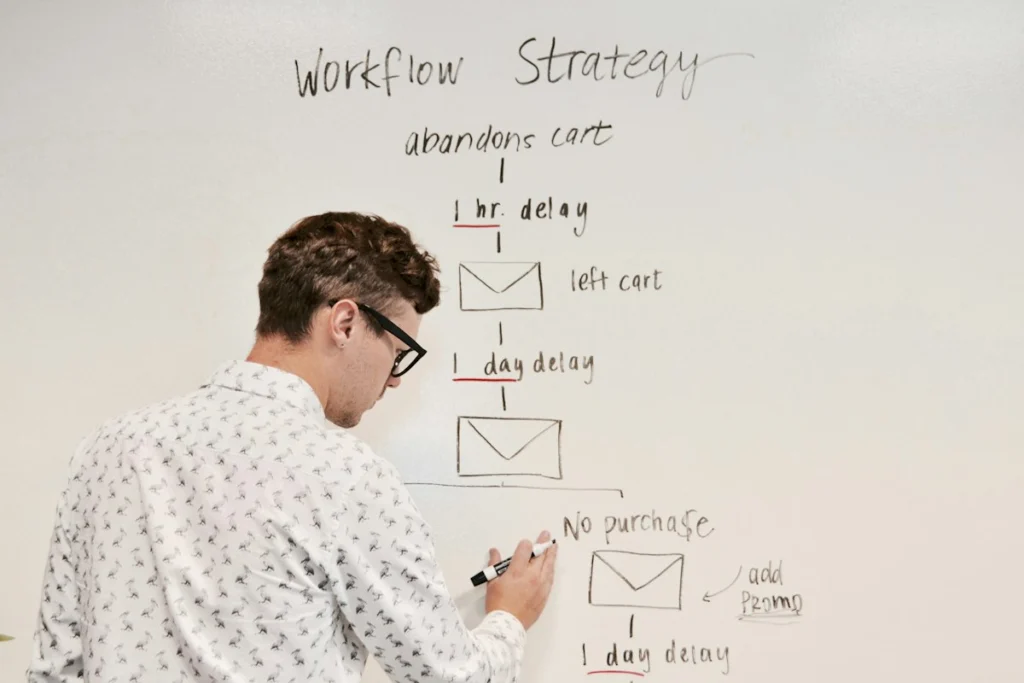
We build content strategies from the buyer journey backward, starting with the decision the content needs to support, then identifying the information gap that is preventing it, then producing content that closes that gap in a way that positions your business as the right answer.

Content that earns traffic and generates pipeline tends to do both for years. Content produced to fill a slot tends to do neither, on any time horizon worth measuring.

What's happening in Content Marketing

0 %
more leads generated by content marketing compared to outbound, at roughly a third of the cost, the gap between content and outbound ROI compounds over time as content assets appreciate and outbound spend expires
0 %
of B2B buyers report consuming multiple pieces of content before making a purchase decision, content that does not address the decision process produces awareness that does not convert into consideration or intent
0 %
of B2B content is never read, most content programmes produce content that exists but is not found, not because the content is bad but because it was not built around a distribution and discovery strategy
0 x
better conversion rate for content with a clear next action compared to content that ends without one, content that does not tell the reader what to do next ends the relationship at the point of maximum attention

What we offer

AUDIENCE & INTENT RESEARCH

Understand who your audience is and what they are looking for before writing anything

We map your buyer personas against the questions and information gaps they have at each stage of the purchase journey, then layer in search demand data to find the intersection of what your audience needs and what is being searched for. Content built from this intersection generates traffic from people with the intent to buy, not traffic that is demographically adjacent to your customers.

CONTENT PLANNING

Build a content calendar around real search demand and business objectives

We produce a content plan that maps each piece to a keyword cluster, an intent type, a stage in the buyer journey, and a measurable objective. The plan is sequenced to build topical authority in the areas that matter most to your business, rather than to produce a uniform distribution of content across all topics at all stages simultaneously, which produces none well.

DISTRIBUTION STRATEGY

Decide where each piece of content goes and why, based on where your audience actually is

Distribution decisions made by default, “we always post everything to LinkedIn and the blog”, produce content that reaches the same audience it always reached and does not expand into new channels. We design distribution by content type and audience segment, matching format and channel to the behaviour of the people the content is trying to reach.

CONTENT AUDIT

Evaluate existing content for what is working, what is not, and what to do with each piece

Before creating new content, we audit what you already have. Most content estates have assets that can be updated and consolidated to rank for competitive terms, content that is cannibalising other pages and suppressing ranking, and content that should be removed. A content audit produces a prioritised action list that typically delivers more organic uplift in less time than new content production.

CONTENT PRODUCTION

Produce content that earns traffic and generates pipeline rather than filling a schedule

We produce content to a technical brief that specifies the target keyword, intent type, required depth, internal linking structure and next action. Content produced to a brief consistently outperforms content produced by subject matter experts without one, not because the brief restricts creativity but because it ensures the content is built around what the reader needs rather than what is easiest to write.

PERFORMANCE MEASUREMENT

Track whether content is generating traffic and pipeline, not whether it is being produced

Content measurement defaults to production volume and social engagement because those are the easiest metrics to report. We measure what the content programme is supposed to produce, organic sessions from target keyword clusters, assisted conversions, and contribution to pipeline, on a monthly cadence that allows the plan to be adjusted based on what is actually working.

THE WEBIZONA DIFFERENCE

Why choose Webizona as your Content Strategy company?

Buyer journey, not content calendar

Content planned from the buyer journey produces assets that move people through a decision process. Content planned from a calendar produces a uniform production output. The difference is whether the content strategy starts with what the buyer needs to know or with what the content team can produce.

Distribute before you produce more

The gap between good content and content that generates traffic is almost always a distribution gap, not a production gap. Before adding content to the plan, we assess how the existing content is being distributed and whether the distribution channels are the right ones for the audience it is trying to reach.

Measure pipeline, not posts

A content programme measured on volume produces volume. One measured on pipeline contribution produces content that moves people toward a purchase. We define success metrics before the programme begins and report against them, so the measurement framework does not drift toward what is easy to track.

Benefits

Common Questions

We audit existing content before recommending new production. Content that was close to ranking, content on commercially important topics, and content that can be consolidated to resolve cannibalisation issues typically produces organic uplift faster than new content from scratch. The ratio depends on the age and size of your existing content estate, a newer site typically needs more production; an established site typically needs more consolidation.
We map content types to journey stages explicitly. Awareness content addresses the problem the buyer is experiencing without naming the solution. Consideration content addresses the category and evaluation criteria. Decision content addresses the specific choice between vendors. Most content programmes are over-indexed on awareness and under-indexed on consideration and decision content, which produces traffic without conversion.
Content that targets informational terms in a non-competitive market can rank within eight to twelve weeks. Content targeting competitive commercial terms on an established domain takes six to twelve months. We set expectations by term, domain authority and competition at the start of the engagement, the timeline depends on what you are trying to rank for and what you are competing against.
Both. We can provide a content strategy and brief pack that your internal team or existing writers execute, or we can produce the content ourselves. Most clients use a combination, strategy and briefs from us, production that mixes internal and external resources depending on the topic and volume required.
We use AI as a research and drafting tool, not as a publication tool. AI-generated content published without significant human editing and expertise injection tends to produce content that is accurate but generic, which ranks poorly for competitive terms because it does not demonstrate depth or first-hand experience that search engines increasingly reward. We use AI to accelerate the parts of content production where it helps and human expertise for the parts where it does not.

Whats happening in Content Strategy